Instagram

Instagram

Wednesday, June 08, 2016

The rise and rise of small wines


I wrote this story for Wanted In Rome some years ago. They no longer have the link live on their website. So here it is in full.
 
By Bernhard Warner

The mid-1980s was a promising period in Italy. The Azzurri were champions of the soccer world. A dip in oil prices triggered a brief economic recovery. And, in the sleepy villages just outside the Marchigiana port city of Ancona, i contadini could pick up jugs of the local wine for next to nothing.


Today, of course, Italy is the defending champs, but that’s about all. The sputtering economy dominates dinner conversations, and, in the piccolo Morro d’Alba region north of Ancona, the old-timers have seen their beloved local wine – the Lacrima di Morro d’Alba – creep ever upward in price once the little known varietal earned a DOC - denominazione di origine controllata - designation in 1985.

From that day, the contadini’s secret was out. Wine lovers took notice of this little grape with a name that’s a mouth-full.

“The external market is big for us today. We get requests from importers in America, Germany and Switzerland,” says Piergiovanni Giusti (pictured at left), a third-generation winemaker who this year expects to produce about 45,000 bottles of Lacrima di Morro d’Alba. Giusti will export three full-bodied reds and a rosé.

For the uninitiated, the grapes pack a distinctive taste – there is little in common with the region’s most productive grape, the sangiovese. The Lacrima di Morro d’Alba has a pronounced, fruity perfume but is light enough to serve with fish dishes, a necessity as this is stoccafisso country.

Giusti calculates 40 per cent of his yield this year will be exported outside of Italy, to New York, California and across Europe. This is a big change from just a decade ago when he and his father, Luigi, were making wine that was almost exclusively imbibed in the hill towns surrounding Ancona. “The change has come in the past decade,” he remarks.

A similar phenomenon is happening across Italy. Italy is unique. It has over 300 indigenous grape varieties, says Terenzio Medri, president of Associazione Italiana Sommeliers. “There are at least five or ten grape varieties specific to a particular region. And each is distinct. The taste of Tuscany is different from the taste of Piedmont. It’s different from the taste of Friuli and the taste of Emilia Romagna. The distinctions can be observed from hill to hill, terrain to terrain,” Medri says.

“Indigenous wines,” he continues, “are very important to the future of Italy’s wine market.” It used to be that when a diner scanned a wine list at a restaurant in Tokyo, London or New York, the choice was limited to some well-known sangiovese or Montepulciano blends from Tuscany or Barolos or Barbarescos from Piedmont. “This is how the international market viewed Italian wines, primarily from these larger regions. But now if you want wine from a particular territory, you can find it. This is very important.”

To be sure, it’s a gradual education. Many indigenous wines simply don’t have the distribution clout of a Brunello di Montalcino or a Barolo. And that’s probably okay – for now.

With a forecast of 550,000 bottles this year, the total output of Lacrima di Morro d’Alba still limits the export potential. So, the six communities that produce Lacrima di Morro d’Alba, named for the quaint hill town Morro d’Alba, have little choice but to concentrate on quality over quantity, investing each year in upgrading the production process. They scored a DOC rating a decade ago and figure the wine quality is good enough to put them in the running for the coveted DOCG designation, Italy’s most prestigious wine rating.

That this obscure vintage is finally getting noticed by wine appassionati should come as no surprise. It’s an ancient varietal that, legend has it, was a favourite of Federico Barbarossa’s court. But in the ensuing centuries, the grape has fallen into obscurity as Central Italy developed its love affair with heartier grape varieties, namely, the ubiquitous sangiovese and montepulciano. As Federico I’s favoured wine makes its comeback, the biggest confusion may be in the curious name. “People see ‘Alba’ and think the wine is produced in Piedmont,” says Giusti.

“Lacrime,” or tears, is a reference to the grape itself. At the time of harvest the grape is brimming with juices, until one day a ruby teardrop appears on the skin. “That’s the signal,” Giusti says. “It’s ready for harvesting.”

About 100 km south, near the Marche-Abruzzo border, the hilly terrain tumbles dramatically as it nears the sea. It must be hell to manoeuvre a tractor up these slopes, but it’s terra ideale for the vines. They are in the perfect position to catch the sea mist in the morning and they have prolonged exposure to the sun in the afternoon. This is pecorino country, another local grape that is winning over the critics and wine lovers alike, even if the name sounds a bit, well, cheesy.

“Certainly there’s a bit of confusion, but it’s limited exclusively to the occasional drinker,” says Simone Capecci, a Marchigiano winemaker whose family, at Poderi Capecci, specialises in vino pecorino. Its “Ciprea” pecorino, a flavourful white with a crisp, golden hue and citrusy bouquet, is now sold in Denmark, Japan, Germany, America, France and Belgium. About 40 per cent a year of the yield is sold outside of Italy, says Capecci.

“Pecorino is a wine that’s in fashion now,” says Medri, echoing a familiar refrain from sommeliers contacted for this article. Like the Lacrima di Morro, the Pecorino has been rediscovered in the past decade by discerning wine lovers, thanks to the work of a few family-run vineyards in the Offida region of Le Marche and just over the border in Abruzzo.

The grape is an ancient one, first cultivated by the ancient Romans, primarily on the eastern slopes of the Apennines. The grape is a bit delicate – it’s generally grown between other varieties for protective purposes – but it seems to be thriving today on its hilly perch. And it’s becoming a conversation piece at Manhattan cocktail parties, or so another journalist informed me recently.

The contadini’s loss is New Yorkers gain, evidently.

Friday, October 09, 2015

New documentary film on DRC's child miners to debut this month

We’re about to debut our work on a special project, an important documentary film, Maisha: A New Life Outside the Mines. It takes you inside the copper and cobalt mines of Democratic Republic of the Congo, the first rung of the global supply chain of “digital minerals” that is trapping millions in poverty.

The film will make its debut in Rome on 29 October at 4:00 p.m. at Radio Vaticana, Sala Marconi, Piazza Pia 3. It will be followed by an important round-table discussion on conflict minerals. Full details are here.


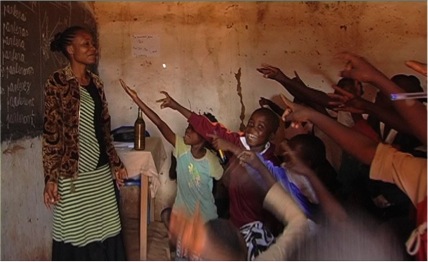
Here are some images from our reporting trip to the DRC.

Background on the film:
This spring, me and the Italian documentary filmmaker Luca Paradiso were granted unprecedented access to the artisanal pit mines around Kolwezi, located in the DRC's mineral-rich Katanga region. This little known part of the wpowerful grassroots project run by the Good Shepherd Sisters that is helping the most at-risk by building an alternative to the mines - a school for ex-child miners, and a cooperative farm and a budding clothing design enterprise for former miners.
orld powers our digital age, giving us the raw materials for mobile phones, computers and the electric grid. We saw first-hand what human rights activists had been reporting indirectly: that there is an appalling level of human misery and exploitation in the mines. We also reported on a

The 30-minute film, sponsored by the U.S. Embassy to the Holy See, offers a rare, up-close look inside the harsh -- and even lethal -- world of artisanal copper and cobalt mining. The film shares a hopeful message as well, showing how an impoverished Congolese community is beating the odds to to build a better, more sustainable tomorrow, and in turn laying waste to the cycle of poverty, exploitation and abuse that traps so many here.

Sunday, February 01, 2015

Big data meets Serial (sort of): our new podcast

Podcast fans, we know you're mourning the end of Serial season 1. Why not try this new podcast (co-produced by moi and a small team of talented journalists)? It involves science, big data, technology and gripping tales. Some great music too! It's called Wild Ducks. Let me know what you think!


Tuesday, July 08, 2014

A geriatric attack on Italy's bloggers


This article originally ran in a October, 24, 2007 article in Times Online, back when I was a columnist there. Now that it's lost behind a firewall I've resurrected the original, unedited version here.


By Bernhard Warner

By G8 standards, Italy is a strange country to define. To put it simply, it is a nation of octogenarian lawmakers elected by slightly younger voters, 70-year-old pensioners. Everyone else is inconsequential.

The prime minister Romano Prodi is a spry 68, knocking off 71-year-old Silvio Berlusconi in last year’s election. President Giorgio Napolitano, 82, has six more years left on his term; his predecessor was 86 when he called it quits. In the unlikely event Italy declares war, the decision will come from a head of state that was a month shy of 20 when the Germans surrendered in World War II.

This creaky perspective is a necessary introduction to any discussion about Italian politics with outsiders, I find. If the Italian government seems unable to adapt to the modern world, the explanation is quite simple. Your country would operate like this too if your grandparents were in charge.

Recently, Italian lawmakers once again took aim at modern life, introducing an incredibly broad law that would effectively require all bloggers, and even users of social networks, to register with the state. Even a harmless blog about a favourite football squad or a teenager grousing about life’s unfairness would be subject to government oversight, and even taxation -- even if it’s not a commercial web site.

Outside Italy, the legislation has generated sniggers from hardly sympathetic industry observers. Boingboing cleverly reports Italy is proposing a “Ministry of Blogging.” Out-law.com plays it straighter, calling the measure an “anti-blogger” law. 

I understand the lack of alarm in their tone. We’ve been down this road countless times. Panicky government officials, whether they are in Harare, Beijing or Rome (yes, this is the second time it’s been proposed here), pronounce a brand new muzzle for the internet, and clever netizens simply find a way around it. Even that agitated teen probably has a foolproof way of masking his IP address. And besides, it could be easily argued that a Blogger or Typepad blog is hosted on a server well outside the bel paese, making a stupid law virtually unenforceable. And finally this is Italy, a place where plumbers and captains of industry alike are serial tax evaders. Don’t sweat it, amico. Enjoy the sunshine, vino rosso and tagliatelle.

Maybe it is because of all these obvious points that the draft law is already going through some revisions. If it is ratified – and at the moment it looks frighteningly likely – the Ministry of Communications would decide who must register with the state.

This is hardly comforting. The intent of this draft law, as it was written when it breezed through the Council of Ministers on Oct. 12, would be to gag bloggers, who, for those in power, have become a particularly problematic force of late. They are lead by the crusading (some say “populist”) Beppe Grillo, a comedian-turned-activist-turned-blogger. Grillo is one of the best-read commentators on Italian life, both in and, thanks to his English-language blog (http://www.beppegrillo.it/english.php), outside of the country. He agitates on behalf of the disenfranchised (code for: Italian youth), campaigning for more transparent government and business.

Grillo believes the law is directed at him. Whether it is or not doesn’t really matter. The law’s impact would turn all bloggers in Italy into potential outlaws. This could be great for their traffic, I realise, but hell on the business aspirations of an Italian web startup, not to mention any tech company that wants to sell its blog publishing software in Italy, or open a social network here. In addition to driving out potential tech jobs, the stifling of free speech also can have a dramatic chilling effect on all forms of free expression, the arts and scholarship.

I am thinking specifically here of my students. I teach an introductory journalism course at John Cabot University in Rome. My students cover the city and university affairs in an online blog-style newspaper called “The MatthewOnline. If this law is to pass, we could not simply move the blog to an offshore server. We’d be one of the few who would be forced to abide by this crazy law.

Each semester, I’d have to get 20 or so students registered with the Ministry of Communications, a bureaucratic nightmare that no doubt would take more than a semester to complete, and would turn a generation of idealistic journalists away from the field forever, perhaps into something more rewarding like the assault rifle lobby. So, instead of teaching aspiring journalists about news reporting by having them do some actual news reporting, we could spend three months doing lead-writing exercises from a textbook.

And so I appeal to Italy’s Communications Minister, Paolo Gentiloni, a former journalist himself, and Ricardo Franco Levi, the lawmaker who conceived of this wrong-headed bill. Is silencing the youth of this country really the best solution to dealing with a few squeaky wheels?

Thursday, July 03, 2014

An interview with Jon Rafman, digital artist

This article first appeared in ContemporArt in January, 2013, in Italian. I have dug up the original draft, in English, and reposted it here following my interview with Rafman in November, 2012. I'm posting it here after getting a note that his latest exhibition opened at the Contemporary Art Museum St. Louis. Hoping it comes to Rome, too!

It may be one of the most ambitious corporate projects of the Internet era: mapping the entire planet street-by-street, alley-by-alley. This has been the goal at Google since 2007 when it launched Google Street View for select cities in the United States. Today, a fleet of Street View cars equipped with a boom-like camera circle the globe capturing a 360-degree street-level perspective of even the streets you’d never dare venture down. Their exploration will feed one of the most heavily used mobile apps on the planet: Google Maps. When the Street View drivers are finished circumnavigating the world, they will start all over again, driving around the entire planet, photographing as they go, street-by-street, alley-by-alley.

It’s debatable whether Google will ever make a dime off such a time-consuming venture. No matter. It’s become a public good -- it keeps us from getting lost. It is also the inspiration for one of the digital art world’s best-traveled exhibitions in recent years: Jon Rafman’s “9-Eyes,” which rolled into Rome’s MACRO Testaccio this Fall after an extended stint at London’s Saatchi Gallery.

To be sure, Rafman’s 9-Eyes is as determined an effort as Google Street View. Fascinated by the idea Google would attempt to photograph and index every shop, house, and apartment block on the planet (and all the characters who live on the street below), Rafman started his own exploration, retracing their route. Clicking through the world of Street View for hours and days on end, he went in search of the fascinating amid mundane shots of street life.

What he found has startled gallery-goers for more than two years. One screen-grab image (pictured above) he pulled from Street View shows a toddler who was abandoned outside a Gucci shop in Taipei crawling with determination and purpose, destination unknown. Another is a scene of sheer panic: neighbors rushing to the scene of a fire in a residential neighborhood in St. Catherine, Ontario. And then there is the oddly poignant,, like one shot that would move even the most  hard-to-impress Roman: a completely desolate Altare della Patria save for a lone gladiator holding his helmet as if pondering his next battle.

ContemporArt spoke to the 30-year-old Rafman last month via Skype to discuss his inspiration behind the project and what he thought of the future of digital art. He was back in his hometown, Montreal. For a change. “I lived in Rome all summer. I did at residency at the MACRO, and became friends with the curators. That’s how 9-Eyes came to Rome. It was a last-minute addition,” he explained.

There are only a few of Rafman’s prints at the MACRO. Luckily for those of us in Italy, they are many of the ones that have been discussed, debated and dissected on Internet discussion forums. The reception to 9 Eyes has been as intense on Reddit, the popular online discussion forum favored by the Net’s cognoscenti, as it has in leading art publications and in down-market London tabloids who were obsessed with the voyeuristic element of it. “The tabloids treated the exhibition more like a sensational human interest story, while the more sophisticated publications treated it on a much more enlightened level,” he said, touching on the implications of what this means for the future of digital as an art form.

Rafman seemed genuinely impressed by the level of discourse from all sides. “I didn’t realize how much of a nerve this was to going to hit when I started the project. I knew, to myself, that there was something really special here, but I do have to say I’m surprised by the level of interest, and how varied it’s been.”

Rafman got the idea for 9 Eyes in 2008 at the height of his interest in the Net.art movement that had him previously exploring, for example, some of the more fetishistic parts of Second Life, a virtual world where users adopt super-sexual avatars and fantastic digital personae to represent themselves. “It was almost a space that was more real than the real world because it exhibited its own artificiality,” he said of the experience there.

Second Life may be passé today, but the compulsive “Internet surf culture” that dominated this world is alive and well in what Rafman tried to achieve with 9 Eyes -- a reference to the 9 camera lenses mounted to the top of the Google Street View car.

“And it’s snowballed from there,” he said.2008, that’s a long time in Internet years.”

9 Eyes has been now shown across Europe, North America and Asia. It’s turned Rafman into a global traveler, enabling him to see in person the same streets of far-away cities that he had first explored from his desk in Google Street View. This is something truly unique to our shrunken Web 2.0 world, he says. “When you go to a place for the first time after you’ve already visited it, it creates a completely different aura to that place.”

Another unique aspect of his work is the thorny issue of ownership. Technically, the images are all Google’s. Rafman just curates the best pieces. Google, he says, has kept its distance from 9 Eyes. The search engine giant does not try to put the brakes on Rafman’s ever evolving artistic treatment of its intellectual property. Rafman, for his part, says he is just paying homage to Google’s adventurous spirit and to the art it creates every day for Street View.

“Never before in human history has anyone tried to photograph the entire world from a human experience,” Rafman remarks. “Not only once, but continuously. That is still inconceivable to me. That is the inspiration for me, the fact that it is an activity that is practically endless. Technically, 9 Eyes will never end.”

Monday, May 27, 2013

Pirates run aground at the polls: The early days of the Pirate Party


This article originally ran in a September, 20, 2006 article in Times Online, back when I was a columnist there. Now that it's lost behind a firewall I've resurrected the original, unedited version here.

By Bernhard Warner
 
Was it naïve to think a populist movement galvanised by a call of downloads for all! could sweep into political power? This rueful question is on the minds of many young Swedes this week after national elections.

The youth-dominated Piracy Party, founded earlier this year in Sweden before spreading to 16 other countries including Britain, failed in its first trip to the polls on Sunday. A party founded on three basic principles – to reform commercial copyright, eradicate meddlesome patent laws and stop the surveillance of file-sharers – proved to be less popular with the voters than tax cuts and job growth, as promised by the victorious right-leaning Moderate Party.

While the official tally was still unavailable as of press time, the Piracy Party was expected to amass in the area of one percent of the popular vote. They had been hoping for four percent (or roughly 300,000 votes), a tally required to earn seats in Parliament and begin the arduous task of convincing lawmakers of the need to rewrite legislation governing copyright and patents and to strengthen privacy protections for all netizens.

The BitTorrent generation’s most organised push yet for copyright reform, certainly the net’s most popular rallying cry, will now be stalled for at least two more years – until after the 2009 European Parliamentary elections, an election the Piracy Party has in its sights.

“Obviously, we’re not happy we didn’t get more of the vote,” Balder Lingegard, a university student from Gothenburg who serves as the Pirate Party secretary and ran for an MP seat, told me this week after a full day of classes. “But if you think what we’ve accomplished for an organisation with such financial limitations, the mood is still high.”

When we spoke last week, on the eve of the elections, he was upbeat and a bit anxious. The early poll results showed promise, and it dawned on him that if successful, the 22-year-old would have to figure out a way to juggle his quantum physics classes with his Parliamentary obligations. Kids these days!

But instead, as Mr. Lingegard dolefully noted this week, it’s back to the books. He says the party’s primary focus now is to get its 9,500 registered members more involved by organising into regional groups to keep the message alive and tap into the next generation of would-be voters, the 14- to 19-year-olds. Above all, he says, the party needs to clarify its position: that it’s not a bunch of freeloaders, an image that dogged the party throughout the campaign.

“The largest problem we had was the party was not considered a serious party. Most of the people we met considered us to be some kind of joke. Some thought we had no serious platform, that we just wanted stuff for free. We believe that this image is beginning to change,” he says.

The issue winning over the sceptical ones is the spectre of increased surveillance. “No one wants a surveillance nation like you have in Britain” he says.

Alluding to the movement’s appeal overseas, Mr. Lingegard vowed the Piracy Party will remain an active voice in the digital copyright debate. Perhaps the party’s rhetoric is already sinking in. Starting with the campaign, some of the more prominent Swedish political candidates have began to question for the first time publicly whether the criminalisation of file-sharing ought to be addressed. Whether it’s a political stunt on their parts to appeal to young voters remains to be seen.

To be sure, whether the Piracy Party will last to the 2009 European elections is, historically speaking, a long shot. Political parties formed on a narrow set of issues – lest you forget, the Piracy Party proudly takes no stance on such hotly debated issues as foreign policy, the euro, taxation or the environment – often quickly fall out of favour with the populace.

Even in the aftermath of defeat, the party is not calling for any radical changes; crucially, it sees no need in adding to its platform the concerns of let’s call it the analogue world: namely, clean air, job security and the euro. The Party, says Mr. Lingegard, has attracted members who were former anarchists, nationalists and communists. “If we were to appeal more to the general public with these issues, the 9,500 members we have today would leave.”

In my first conversation with Mr. Lingegard in June, I asked him how he would define the party using conventional political labels. Is the Piracy Party centrist, I asked? Right or left? Could it be libertarian or even communist? Certainly, elements of each would appeal to a sharing-is-good, keep-government-out platform. Mr. Lingegard responded there is no –ist that applies to the Piracy Party.

Perhaps that clinched the party’s downfall. To quote one famous –ist, Vladimir Ilyich Lenin: “Politics begin where the masses are, not where there are thousands, but where there are millions. That is where serious politics begin.”

It’s a bitter lesson learned for this young movement. Filesharers of the world, you are still not united.

The Politics of Piracy: the origin of the Pirate Party Movement

This article originally ran in a June 8, 2006 article in Times Online, back when I was a columnist there. Now that it's lost behind a firewall I've resurrected the original, unedited version here.


By Bernhard Warner

If file-sharing BitTorrent fanatics were to form a political party what would it stand for? Would it adhere to a left-leaning platform, prioritising social services? After all, “free” is their mantra. Or, would it take a page from the political right, arguing for smaller government and free market ideals? To be sure, your typical downloader’s biggest enemy is government intervention.

Vast in numbers, highly educated, well connected, downloaders are a political force. And yet it’s highly unlikely any of the major political parties in the West would consider taking them under their wing any time soon. For that reason, some 6,000 Swedes (and counting) have formed their own political party: The Pirate Party.

To be clear, the Pirate Party doesn’t just represent all-you-can-eat downloaders, but downloading is the principal activity this group -- ranging from their teens to late 50s -- seems to have in common. “For a lot of members this is the first political party they’ve ever joined,” says 21-year-old Balder Lingegard, an engineering student from Gothenburg who serves as the Pirate Party secretary and is a Parliamentary candidate in this September’s national election. “For some, they have felt betrayed by the political system for a long time, feeling it did not represent their interests. Others felt as if there was never an important enough issue for them to take a political stand.”
That “important issue” occurred last week in the form of a raid by Swedish police on The PirateBay, a community of over 1 million BitTorrent users who use the popular technology to exchange all manner of files from copyrighted movies, video games and music to open source software. Not surprisingly, Hollywood executives and record labels have been trying to shut down the Pirate Bay for over a year. On May 31, they succeeded – if only briefly.
The uproar from the take-down triggered something of a rarity in the West: political activism among the Xbox Generation. An estimated 1,000 youths took to the streets of Stockholm and Gothenburg on 3 June to protest the raid in rallies hastily organised by The Pirate Party. While the Pirate Party is not affiliated with the Pirate Bay, the party has used the controversy to pick up much-needed support before the national elections three months away. The party tripled membership in under week, putting it at over 6,000, and the publicity from the raid is giving the party, formed in January, much needed exposure.
Now, the party is thinking big. Its goal is nothing short of representation in Parliament, meaning it will have to capture at least four percent of the popular vote in September. It intends to put 140 candidates on the ballot vying for the 349 seats in Parliament. To appeal to the estimated 1.5 million active downloaders in Sweden (a figure, it must be noted, supplied by the Party), the Pirate Party has been fine-tuning its message to the masses.

“We have three basic pillars to our political platform: shared culture, free knowledge and a protected private life,” says Lingegard. That means: 1) suspending copyright protections five years after the creation of a particular work (shared culture), 2) the abolition of patents (free knowledge) and 3) enhanced individual privacy that would seek to eradicate pesky surveillance cameras (protected private life).

The fact that Sweden, a member of the EU and WTO, is governed by international agreements that would make points 1 and 2 nearly impossible promises to fulfil is of little concern to Lingegard. “Sweden is regulated by national treaties, we are aware of that. But still, this is a good place to start,” he says confidently.

But what about foreign policy, for example? Where does the Pirate Party stand on the war in Iraq or the adoption of the euro? “Our standpoint is simple: We take no standpoint on those issues,” he says. Instead, the Pirate Party, if elected, plans to throw all its support behind the top party as long as they, in turn, support the “shared culture, free knowledge and a protected private life” platform of the Pirate Party. In that way, says Lingegard, the Pirate Party will forever escape the convenient labels of left, right or centrist.

But to regard the Pirate Party members, and downloaders in general, as opportunists would perhaps be selling short the movement. Lingegard describes the core Party member as culturally aware, concerned for the future and technologically sophisticated. They bank online, shop online and, of course, share online, which would make them, to use traditional political labels, consumerist and communist chic.

Perhaps this is what Lingegard means when he says the political establishment in Sweden just doesn’t understand this constituency. But name for me an elected official anywhere who understands a voting bloc that, as Lingegard says, is neither “left, nor centre nor right”. (We can certainly disqualify any head of state who thinks it’s called “The Internets”).

We may be searching for years for a familiar –ist that could help define their politics. But, thanks to Pirate Bay, we can rule out one. They are no longer isolationists.

Monday, August 27, 2012

Wanted: your most vivid vacation memories

Have you ever spent any time in the hills of Le Marche, underneath the commanding Monti Sibillini range, enjoying a fine glass of Verdicchio or Pecorino... at a place called Casa Chiocciola? If you've ever been a guest at our lovely hilltop get-away, we'd be grateful if you could share a few words about your experience here with others on TripAdvisor.

Grazie

Why it's a good thing to stop and watch the fireflies

A few weeks back some guests who spent the week at Casa Chiocciola, our place in Amandola, left us this sweet note. I thought I'd share it with you here:

My wife described our stay as magical; the house was great, the views terrific and the wildlife stupendous. We have never seen so many butterflies in one place at one time and together with the humming bird moths we spend many an hour trying to photograph them. Unfortunately they moved so fast that many of the photos we took are completely out of focus. We did manage to get a few though. However the outstanding event was one night when there were myriads of fireflies. We have never seen them before and it was magical.

Wednesday, July 11, 2012

Summer time, and the living is easy

We're in the middle of one of those Italian summer heat waves where life in the city is pretty unbearable, sleep-deprived unbearable that is. Thank goodness we're far away from that. We're in Sant'Ippolito at Casa Chiocciola for the next two weeks where there's a lovely breeze and the trees hang low with fruit and where the girls can run around in their mutande, trudging over the grass and splashing in an inflatable pool we've set up underneath two shady oaks.  It's a real paradise for them here and I cannot help but smile as I see them shriek in delight as they chase butterflies and throw stones off the bank into the roadway, and find mischief that only two-year-olds can find in the countryside when they're allowed to run free. To see two people love this place as much as their dad fills me with tremendous pride. It will be theirs some day (hopefully, senza mutuo), I guess.


2012 is something of a landmark year for me and for this place – it's our 10-year anniversary. Amazingly, I've been coming here for one-quarter of my life. In those early years I had no idea what would become of this place. I was living in another country, living on a journalist salary, with big debts to pay. My grasp of the language was tenuous. My confusion over Italian tax law and red tape was even more daunting. I had no roots here. I had no real claim to this land, this place, these people, their history. But a lot has happened in just a few years. Xtina and I have made Amandola a true second home, a second home that squeezes in even in-laws from time to time.


The girls seem to complete this harmonious picture. They enjoy this place as much as I enjoyed another hilltop house from my youth, my grandmother's house "in the country," up in rural Sussex County, NJ. It would be a stretch to draw parallels between Lake Neepaulin and Sant'Ippolito (though there is that lake thing going for both communities) and yet I still get these vivid flashbacks of that place when, for example, I'm here listening to the breeze rustle the trees or watching the tractors bail the hay, or the shepherds corralling flocks of sheep, or watching the girls race each other up and over the crest of the hill. I now understand that I can see and hear these things because I've managed to slip into Sant'Ippolito's tranquil rhythm. The Lake Neepaulin of my youth had it too. It's a rhythm I hope my girls too will come to appreciate when they hit 40 too.

Tuesday, March 13, 2012

Social media and learning from the #FAIL-ings of others

Where have I been the past few months? Putting together a book, the first ever by our publishing outfit, SMI Publishing. The book is called #FAIL: The 50 Greatest Social Media Screw-Ups and How to Avoid Being the Next One and it's available on Amazon or as an epub download on Lulu for iPad, iPhone and Nook. iBookstore, Nook store and paperback coming soon.

Here's a description:

All corporate screw-ups are social. Don’t believe us? Pop onto Twitter and type in the word “#Fail” or search the word “boycott” on Facebook. Up pops the names of many of the world’s largest brands, and the latest consumer grievances and organized pressure campaigns against them.
Our new SMI book – #FAIL: The 50 Greatest Social Media Screw-Ups and How to Avoid Being the Next One chronicles another kind of digital pioneer, those brands that have made iconic, early stumbles in social media that have resulted in consequences well beyond a loss of a few “friends” or “followers.” From a lock-picking geek’s take-down of Kryptonite in 2004 to Carnival Corp’s tin-eared response to the Costa Concordia tragedy in January, 2012, the blunders chronicled here cost companies millions, bruised well-honed corporate reputations and sunk careers. There are plenty of mistakes to learn from here – or at least chuckle at in disbelief.

Monday, October 31, 2011

Sunday, October 30, 2011

Amandola: a love affair turns 10

This month marks something of a milestone for me. It was exactly 10 years ago – October, 2001 – when I first visited a town in the heart of the Sibillini Mountains in the Central Italian region of Le Marche. I was so enamored with the place, I immediately thought: I gotta ring my bank manager.  The place, as you know from this blog, is Amandola. I had a little money left in my bank account, just enough to make a down-payment on a stone house sitting on the top of a hill, one that overlooked a valley and the front ridge of the Sibillini Mountains. The sun was shining bright. I stood on a stony lane under an old oak. I was desperate curious to see the inside of the house, but Michael, who had the keys, insisted we first go take a walk, to look around the 'hood, to come to this spot and take in a view I'll never tire of: the midieval spa town, Sarnano, in the valley below, the mountains soaring above, the hilltop towns of Gualdo, San Ginesio sparkling in the sun just beyond.

It took a few months for the sale to close. I had the keys the following March. I was cutting the grass in April, and again in May and June. I was swimming in the sea in July and in the mountain lakes in August. I was discovering a new culture, improving my pigeon Italian and re-acquainting myself with the art of home repairs. I lived in London at the time and got out as often as I could, which, thanks to Ryanair, was fairly often. We threw big pizza bashes and barbeques and, later, we had some amazing Thanksgiving, Christmas and New Year's feasts. As the name suggests (in Italian, Amandola can be broken into "amando la," or loving her) I fell in love with the place. And I still am we still are. Amandola is now a wondrous playground for the Garba twins. Our summer get-away is now the highlight of the year.

Now, this is not a 10-year anniversary thing, but I do have a new site that explains a bit more about the house, and the region and the things about the place that we've discovered over the years. It's called Sibillini Slow. And, I've set up a Facebook page for it as well. Please check it out and follow us.


Thursday, October 27, 2011

How to be UnGoogleable

One from my personal archives...

By Bernhard Warner (May 28, 2008)

Recently, I received an odd plea for help. A former colleague emailed me to request that all references to her be expunged from the online news blog I coordinate for a university here in Rome. It was a legitimate request, I concluded. I went into the old posts and deleted the one in which her name appeared. (I should note here that the post was about an upcoming event on campus from over a year ago and had absolutely zero news value to readers today. So, I pulled it.)

She was grateful for my quick response. A few minutes later though she was back in my in-box. This time, the tone was less gracious. She Googled her name and still the reference appeared. Clicking on the link brought you to a dead URL, but still there was enough of an article snippet visible on the Google search results page to clearly identify her with the university. She told me she’d prefer to remain at all costs “un-Google-able”.

At first I was startled by the statement. There is a whole industry dedicated to making you or your business appear top of the heap on Google, Yahoo, MSN, etc. Search engine optimisation experts, those whose job it is to find every soft spot in search algorithms, abound in every language. Visibility is big business. Why would you want to hide from the search engines?

Of course, there are plenty of reasons. Some ordinary people, politicians, celebrities, companies or brands simply want pieces of their past concealed, or, ideally, wiped off the public record. It’s possible to achieve the former. But eliminating all signs of a person’s existence, once published online – i.e. achieving a state of “un-Google-able” – that’s another story entirely.

“Un-Google-able? I don’t think it’s possible,” says Nilhan Jayasinghe the European Vice President and Head of Natural Search for iCrossing, an online marketing firm that specializes in SEO and online reputation management for major brands like Toyota, Coca-Cola and LEGO. “The problem is you simply have no control over all the outlets that publish something about you”.

If the published item is a one-time reference and it’s pulled offline relatively quickly, then there’s a chance you can escape the search engines’ reach. In the case of the post I mention above, the Google spiders swept the news blog about two weeks later and all traces of the original story (as far as I can tell) were eliminated. She was lucky.

Had the story been picked up by just one blogger who then made mention of her on his blog, or had her name been posted on a social network site or in some community forum or newsgroup somewhere, forget about it. There’s virtually no way to get all the references taken down unless you track down each person responsible for publishing the details and plead your case to them. Or, had she been photographed with a group of ex-colleagues and had she been tagged in the caption there’s a good chance these days that that photo would end up on Flickr or another online photo-sharing site for the wired world to see. To be sure, monitoring your personal reputation in this Web 2.0 age is a real chore.

For big brands it’s becoming a full-time occupation. “For a company with a reputation issue that’s being discussed online, all you can do is strengthen your own position,” Mr. Jayasinghe says. “The idea is to get your positive news out there more prominently online, and increase the prominence of others talking about you so as to bury the bad results”.

For major corporations, there’s a simple formula to keeping reputations intact these days, one that they may be surprising to hear. Like the old song goes -- you’ve got to accentuate the positive. The problem is corporate PRs and political spinmeisters have a long history of attacking the unsavoury version of a story. It’s the eliminate the negative school. But this approach doesn’t work any more. The more you attack the negative, the more visibility you give it, and the more prominence it gets when someone types in a search query.

Mr. Jayasinghe gives an example of how best to approach bad news that just won’t go away online. A pharmaceutical client was taking a beating from activists, bloggers and consumer watchdogs for some business decisions it had made in the past, he recalls, adding “and they thought the treatment was neither fair nor ethically right.”

The prescription? iCrossing advised the client to begin publishing all the positive news it had about the situation, even enlisting the help of charitable organisations it worked with to bring to light a new side of the debate that had not been discussed. In publishing the positive news the company was able to defend its reputation and steal attention away from its critics.

“With many clients, we have been able to help them suppress it (the critical chatter) provided they have enough positive material they can use to build up their reputation,” Mr. Jayasinghe.

That works fine for big brands. But what about private citizens, ones with no PR budget or brand-reputation specialists to call upon? You may succeed in getting your university friends to pull offline those embarrassing late-night-drinks-filled photo shoots before a prospective employer sees it, but otherwise, your reputation is in the hands of many. You have less control than you think. Sounding a bit like an overprotective parent, Mr. Jayasinghe advises, don’t do anything stupid that can later be republished online.

As for being “un-Google-able”, forget about it. The majority of us all will be easily indexed on Google (or worse, a wanton namesake will be) at some point in our lives. But even private citizens can bury the embarrassing bits. If you care to.
 
I wrote this article back in 2008 when I had a column for The Times (of London). It's now hidden behind the Times paywall. The original article can be found here.

Sunday, October 09, 2011

olives!

Thursday, September 01, 2011

Vinofiles, the harvest season approaches. Fancy a trip to Italy?

I'm back in Rome after a few blessed weeks in the hills of Amandola. It was the greenest August I can recall in the foothills of Sibillini National Park. Not surprising after a wet July (as the photo album below can attest).

That might not have been great news to travelers, but it had wine producers smiling. The uncharacteristic summer rains have winemakers optimistic that the 2011 vintage will be one of the finest in years. Of course, we'll all know in the coming days when the grape harvest starts, usually in mid-September. And that's kind of the point of this post.... it's a call to vinofiles curious about experiencing this magical time of year: the annual grape harvest when the locals' grins grow to even greater proportions. Marche is a rich wine-producing region for red, white, and rose'. It is the home to dozens of indigenous grapes, most famously the Verdicchio, but there are also very impressive lesser-known whites like the Pecorino and Passerina, and the fragrant red Lacrima di Moro d'Alba.

From Amandola, it's easy to get to all these wine-producing regions. Let us know if you want to book Casa Chiocciola, our lovely stone house in the foothills of the soaring Monti Sibillini. We're offering a special discount on remaining dates in September and August. Drop me a line at Bwarner@gmail.com for futher details.

Buon gusto!

Sunday, May 29, 2011

A weekend in piazza: the Beatification of JP2

This is a bit late in posting, but it's still worth it. A few weeks ago me and a young documentary filmmaker from Rome, Luca Paradiso, spent the better part of a weekend camped out in Piazza San Pietro to film the Beatification of John Paul II, a story told through the eyes of the weary pilgrims and faithful who made the journey from all over the world. We had a lot of fun doing it for one of my clients, Opera Romana Pellegrinaggi.

Here is their story:

Monday, January 24, 2011

The Mamertine Prison, the Leavenworth of Ancient Rome


This year, I'd like to get back to blogging. Here. I've been a bit time-stretched with the launch last year of SMI and, more recently, Jospers. But I hope this year to get some time to blog about life in Italy more. A few of you have long given up on me. I'm hoping to win you back… with stories like this one.

First some background: On Thursday I co-organized a private tour of the Carcere Mamertino (or, Mamertine Prison) just beside (and under) the Roman Forum for select bloggers and Rome-based journalists. It was on behalf of a fascinating new client, Opera Romana Pellegrinaggi, part of the Vatican. ORP has one-of-a-kind access to many of the most important historic and cultural sites in and around Rome including guided tours of the Sistine Chapel at night, the Vatican Gardens, a Vatican Library exhibition, and the Carcere. (They also organize pilgrimages to the Holy Land, Lourdes, Santiago de Compostela, etc.) ORP works closely with some of Rome's most important historians and archaeologists on the preservation and upkeep of these sites. On Thursday, they arranged to have Patrizia Fortini, an archaeologist who was part of the excavation team for works on the jail a year ago and in 2000, give us a guided tour. A bit on the excavation that wound up last year: it was crucial work as it lent more evidence to a story that's been circulating around this city since Emperor Constantine's day - that saints Peter and Paul were both imprisoned here prior to their execution. It's a legend that gives this sacred place extra importance to Christians looking for insight into those turbulent early days of the Church. The conclusion: there is still no 100% proof Peter and Paul were incarcerated here, but it's very, very likely they were.


Fortini explained to us that the Carcere had a dark and bloody past, also a sacred and spiritual one. First, the bloody part. As Rome grew into an conquering force it needed a proper maximum security prison to house its vanquished foes. The city fathers turned to what had been a pagan shrine, establishing it as the maximum security prison of the ancient world in the centuries before the birth of Christ. Here they imprisoned reviled enemies of the Kingdom/Republic. Why here? Location. Victorious armies could parade enemy combatants through the Foro Romano (cue cheering, baying throngs) and straight into the Carcere where they were executed (usually by public strangulation or stoning or something equally brutal) fairly soon after.

To the early Romans, the Carcere was well known as a place not to be messed with, even before it became the Leavenworth of ancient Rome. It was known that a spring ran under the jail. To the deeply superstitious pagan people the subterranean waters were believed to be a conduit to the netherworld (Fortini says they looked for this underground river, but there's nothing). Killing someone here, the ancient belief went, would send them straight to Hell. The Romans trotted out this story as if it were fact that this jail was literally the gateway to Hell. Anyone who entered here never returned, but instead met an end of eternal damnation. Imagine then the state of mind of Peter and Paul upon entering this place, chained, beaten and condemned to eventual death. They had stronger convictions, as did their determined, early Christian followers. This of course made Peter and Paul even more dangerous to the State. Executing them here, the thinking may have gone, would silence these early Christians. This is an important point. Peter and Paul were indeed enemies of the State. Following the tradition of the day, they would have most certainly been imprisoned here in the baddest of all jails of the ancient world.

Among the other things Fortini told us was the discovery of remains of three cadavers - a man (at about 180 cm tall, a very large one for this era), a woman and a 10-year-old child - during the most recent excavation. The fascinating detail came from radio carbon dating determined they were from the 8th Century BC, which gives us a bit further detail on just how old this place is. The official history is that the jail construction started at in the 6th Century BC, but this discovery would show that the foundations go back much further and that it served some major function for the city well before it became known as a prison.

A tour of the jail (it's open to the public) is really one of those uniquely Roman experiences. It's rich in history and spirituality. Archaeologists have succeeded in piecing together vital bits that spell out just what kind of deadly consequences the founders of the Church would have been facing as they sought to build their flock. It's something to put on your itinerary if you are interested in early Church history and the life (and death) of the Church's founding patriarchs.

If you are coming to Rome and want to book a tour, you can reserve tickets here. In the off-season, it's possible to do a tour without booking ahead. Still, it's advisable to reserve a place.

Where is the Mamertine Prison: located near the Arch of Septimius Severus in the Roman Forum. It is literally under San Giuseppe dei Falegnami Church, just off the via dei Fori Imperiali.

For another review, check out Arlene Gibbs' reportage on Nile Guide: Rome.